
Pipedream Industries

The Science: Traditional vs. Trident

Standard concrete leaves significant cement unreacted. Here's how traditional hydration works—and how Trident's approach achieves more complete conversion without changing your mix design.

Traditional

75–85%

cement conversion

With Trident

90–95%

cement conversion

Traditional

The limitation

How standard concrete behaves

Cementitious materials bind aggregates through hydration—a chemical process that forms calcium silicate hydrate (C-S-H) crystals.

This process is inherently incomplete.

15–25% of cement particles remain unreacted, even in well-mixed concrete. That means wasted material cost and unrealized strength potential.

Typical conversion: ~75–85%

Trident

The solution

How Trident improves the process

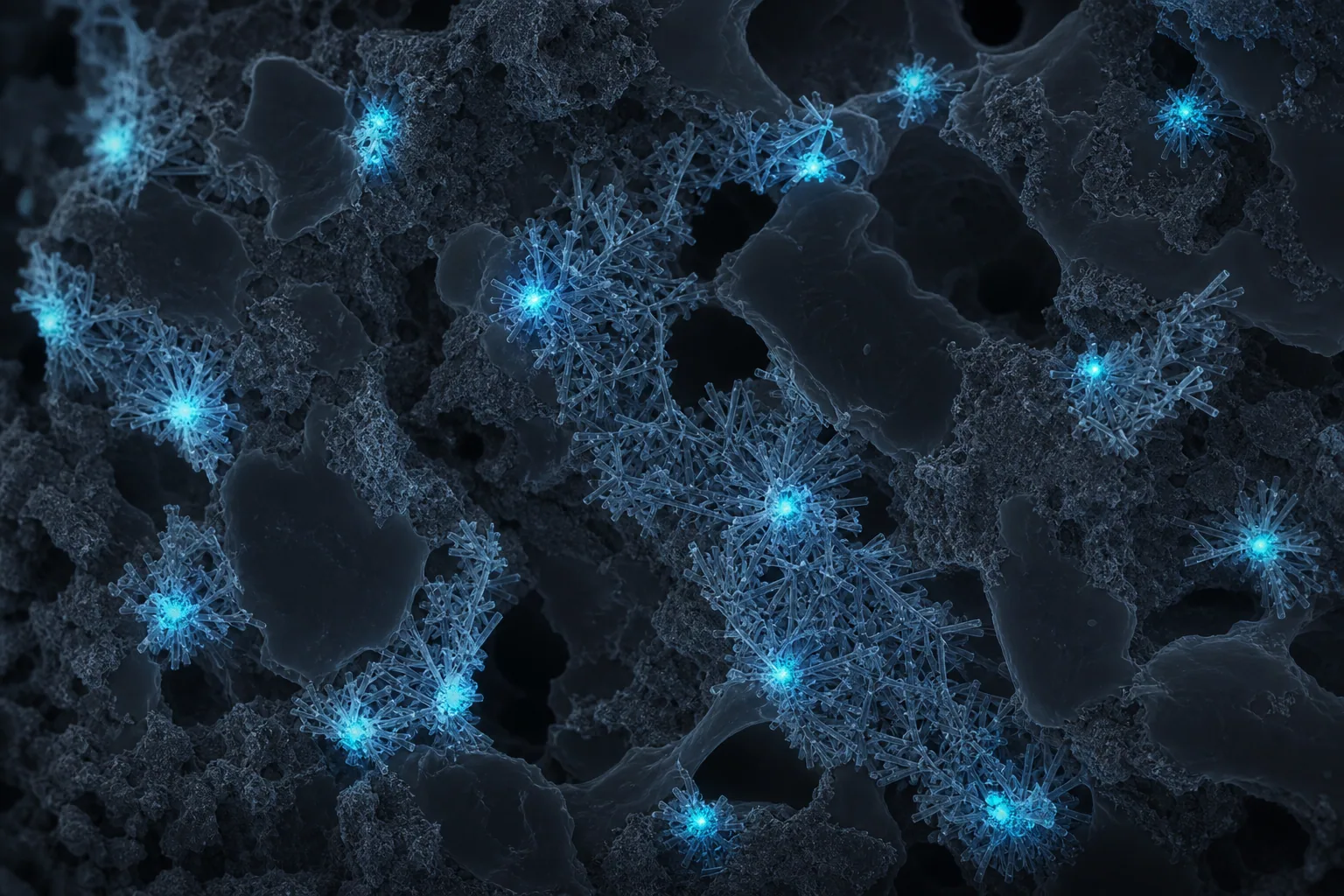
Trident's modified nanomaterials integrate into the concrete matrix during hydration. They provide additional nucleation sites and reinforce the developing pore structure—without accelerating the reaction like traditional accelerators.

Result: more complete hydration, denser microstructure, and improved mechanical properties. No change to mix water, workability, or curing requirements.

Trident mechanism showing nucleation sites and improved pore structure

Conversion with Trident: 90–95%